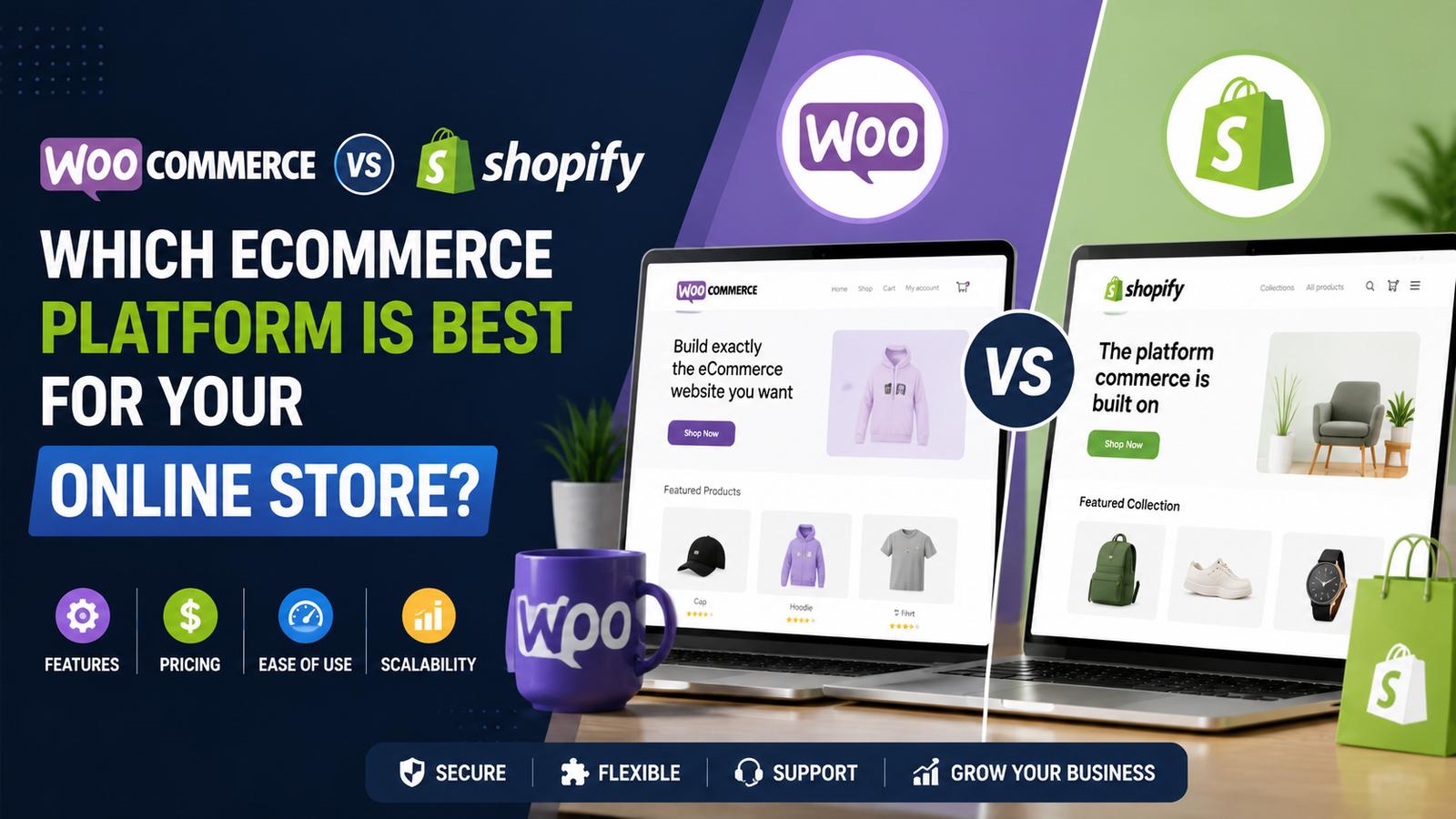
Choosing an e-commerce platform for a growing global enterprise is no longer just a debate about features—it is a critical decision about Total Cost of Ownership (TCO), operational agility, and technical risk. (Magento vs WooCommerce)
For years, the conventional wisdom was simple: start on WooCommerce when you are small, and migrate to Magento (now Adobe Commerce) when you hit enterprise scale. However, in 2026, the e-commerce landscape has fundamentally shifted. With Magento Open Source 2.4.6 reaching End-of-Life (EOL) for regular support in August 2026, global IT Directors and CMOs are facing a massive infrastructure crossroads.
Should you absorb the heavy licensing fees and maintenance debt of Adobe Commerce, or scale your operations using a high-performance, custom WooCommerce architecture?
Here is the unfiltered engineering breakdown of Magento vs WooCommerce for mid-market global brands, and why relying on monolithic infrastructure is no longer the only way to scale.

1. The Core Architectural Difference
Magento and WordPress (with WooCommerce) both power billions in annual revenue, but they were engineered to solve different technical problems.
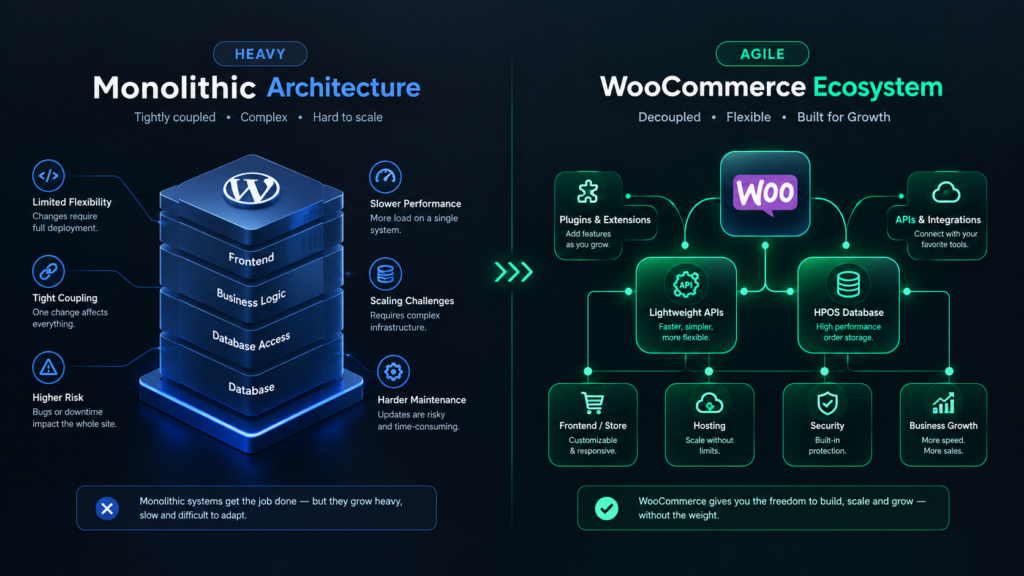
Magento (Adobe Commerce): The Monolithic Heavyweight
Magento was engineered purely for e-commerce. It is designed to handle extremely complex B2B catalogs (500,000+ SKUs), multi-warehouse routing, and tiered pricing out of the box. However, this complexity requires heavy server resources, highly specialized developers, and a massive budget for ongoing security patching.
WooCommerce: The Agile Ecosystem
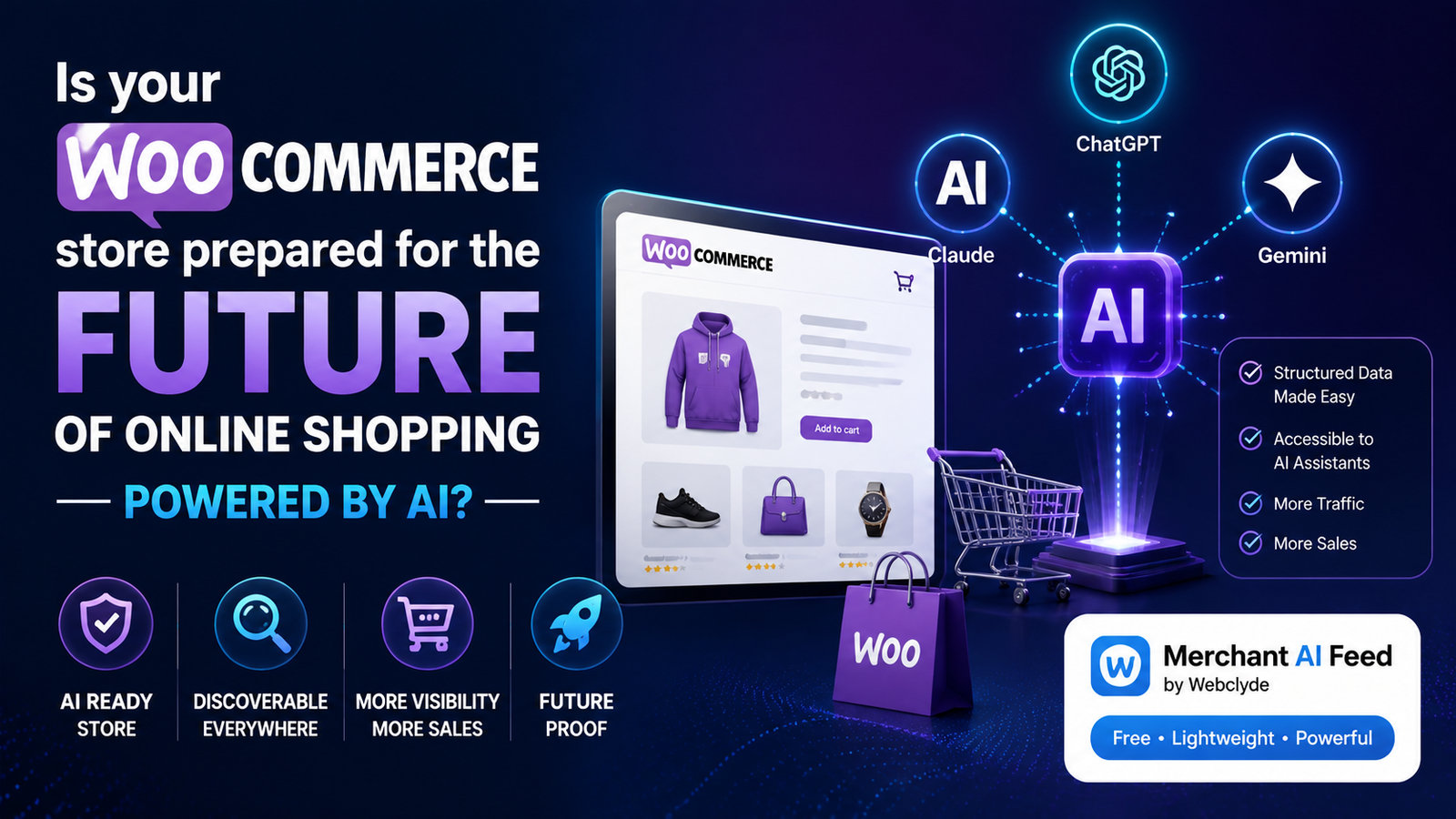
Woo Commerce transforms WordPress into an e-commerce engine. Historically, its limitation was database performance at scale. However, with the universal adoption of High-Performance Order Storage (HPOS) and native AI-agent readiness in 2026, Woo Commerce now handles massive concurrent transaction volumes effortlessly. When engineered correctly—without bloated third-party plugins—it delivers enterprise speed with unmatched flexibility.
2. Comparing (Magento vs WooCommerce) the Enterprise Reality in 2026
To understand which platform aligns with your global revenue goals, we must evaluate them across four critical business pillars.
| Metric | Magento / Adobe Commerce | Custom WooCommerce (WebClyde Standard) |
| Total Cost of Ownership (TCO) | $120k – $450k+ per year | A fraction of Magento’s TCO; no license fees |
| Agility & Content (SEO) | Rigid; CMS is secondary | World-class CMS; optimized for GEO and AI search |
| Performance Scaling | Heavy; requires expensive cloud infrastructure | Lightweight; scales cleanly with custom architecture |
| Security & Compliance | Isolated patching; EOL risks in late 2026 | Continuous agile security; strict GDPR/EAA compliance |
Total Cost of Ownership (TCO)
The financial burden of Magento is stark. Adobe Commerce licensing scales directly with your Gross Merchandise Value (GMV). When you factor in the required enterprise cloud hosting, complex integrations, and dedicated developer retainers, a full deployment routinely costs hundreds of thousands of dollars annually.
Custom WooCommerce development eliminates the software licensing line item entirely. While you still invest in premium hosting and elite engineering, your capital is deployed toward driving growth and custom API integrations rather than paying for access to the software.

SEO, GEO, and Content Marketing
If organic traffic and content are central to your global growth plan, WordPress maintains a clear edge. Magento is excellent at structuring product data, but its native CMS is rigid. WooCommerce leverages the WordPress foundation, making it the superior platform for Technical SEO and Generative Engine Optimization (GEO). Your marketing team can seamlessly blend high-converting product pages with authoritative content, without writing a single line of code.
Security and The EOL Risk
Security is not about the platform; it is about how it is engineered and maintained. Adobe provides robust security, but the looming end of regular support for Magento Open Source 2.4.6 in late 2026 means businesses must either migrate to paid Adobe Commerce tiers or risk severe vulnerability exposure.
A custom-engineered WooCommerce ecosystem—maintained through rigorous Service Level Agreements (SLAs)—provides proactive vulnerability patching, continuous malware scanning, and absolute alignment with global GDPR and European Accessibility Act (EAA) data laws. (Magento vs WooCommerce)
3. The Danger of the “Plugin Trap”
It is crucial to understand that an enterprise WooCommerce build looks nothing like a $500 freelance project.
The biggest mistake growing brands make is relying on cheap page builders (like Elementor or Divi) and stacking dozens of third-party plugins to replicate Magento’s functionality. This creates massive “platform bloat,” resulting in slow load times, broken checkouts, and severe security flaws.
The Solution: Bespoke Web Engineering
Enterprise scale requires clean code. At WebClyde, we do not rely on fragile plugins. We engineer lightweight, custom Gutenberg blocks and bespoke API integrations. By writing clean PHP and JavaScript from scratch, we build WooCommerce environments that seamlessly handle native multi-currency support, cross-border payment gateways (Klarna, Mollie, SEPA), and ERP synchronization with zero platform bloat.
4. The Zero-Downtime Migration Strategy
As the maintenance costs of Magento skyrocket, many mid-market enterprises are choosing to modernize their infrastructure by migrating to WooCommerce.
However, moving a massive corporate database is a high-risk operation. A poorly executed migration will destroy your organic Google rankings, break customer accounts, and halt live sales.
How WebClyde Eliminates Migration Risk:
- Strategic Data Mapping: We safely extract complex catalogs, customer data, and legacy order histories.
- SEO Preservation: We implement strict 301 redirect protocols to ensure URL structures are preserved and organic search traffic never drops.
- Zero-Downtime Launch: We test the new architecture in isolated staging environments and execute flawless, zero-downtime deployments, protecting your live revenue.
Conclusion: Which Platform Should You Choose? (Magento vs WooCommerce)
Choose Magento (Adobe Commerce) if: You are a massive global enterprise processing hundreds of thousands of complex B2B SKUs, managing dozens of physical warehouses, and you possess an annual technical budget exceeding $250,000 for licensing and maintenance alone.
Choose Custom WooCommerce if: You are a mid-market global enterprise or scaling D2C brand that demands lightning-fast performance, elite SEO visibility, and complex cross-border trade capabilities—without the crushing weight of monolithic licensing fees.
Scale Your Digital Infrastructure with WebClyde
Do not let outdated technology or bloated templates hold back your global scale. Backed by the 15-year software engineering legacy of AM2AM Software and a dedicated team of 120+ global product experts, WebClyde engineers custom, high-performance WooCommerce ecosystems that completely eliminate technical risk.
[ Book a Technical Strategy Consultation ]
Frequently Asked Questions (FAQ)
Can we switch from Magento to WooCommerce without losing our SEO rankings?
Yes. A secure WordPress migration requires strict data transfer protocols and precise 301 URL mapping. WebClyde executes complex legacy website upgrades with guaranteed zero downtime, ensuring your organic search rankings and historical data are fully preserved.
Can WooCommerce handle high-volume global traffic?
Absolutely. When engineered by experts, a custom WooCommerce ecosystem utilizes High-Performance Order Storage (HPOS), advanced server-side caching, and lightweight custom code. This allows the platform to handle massive concurrent traffic spikes without database lockups.
How does custom WooCommerce handle cross-border payments?
We architect WooCommerce platforms tailored for international trade. This includes engineering native multi-currency routing and seamless API integrations with localized payment gateways like Klarna, Mollie, Stripe, and SEPA, ensuring a frictionless checkout experience globally.
Is WooCommerce compliant with European data privacy laws?
A standard setup is not enough. WebClyde builds privacy-first architecture, ensuring your digital ecosystem strictly adheres to global GDPR regulations and the EN 301 549/WCAG 2.1 Level AA accessibility guidelines required by the European Accessibility Act (EAA).