Web development trends 2026 are less about chasing novelty and more about which technologies have crossed from experimental to expected. AI coding tools have gone from a developer curiosity to daily infrastructure, cybersecurity costs have hit record highs, and mobile now carries the majority of all web traffic. Whether you’re running a startup or an established business, understanding which trends are backed by real adoption data — and which are still hype — determines whether your next website investment pays off. Partnering with an experienced web development agency like WebClyde ensures your site is built on the technologies that matter now, not the ones that sounded exciting two years ago.
7 Web Development Trends Defining 2026
1. AI-Powered & Agentic Development
AI has moved past autocomplete. JetBrains’ January 2026 survey of over 10,000 professional developers found that 90% now regularly use at least one AI tool at work, up from 85% just months earlier — and Stack Overflow’s 2025 Developer Survey (49,000+ respondents) put overall AI tool adoption or planned adoption at 84%, up from 76% the year before. The shift in 2026 isn’t just usage volume — it’s a move from AI as a coding assistant to “agentic” interfaces, where AI agents handle multi-step tasks inside applications directly, from testing to documentation to deployment workflows.
What this means for your site: AI-assisted development can meaningfully speed up build time, but the code still needs experienced review — reports show developer trust in raw AI output has actually declined even as usage has risen, precisely because unreviewed AI code can look correct while containing subtle errors.
2. Progressive Web Applications (PWAs)
PWAs remain one of the most practical trends for businesses that want app-like speed and offline capability without the cost of building and maintaining native iOS and Android apps separately. A well-built PWA loads fast, works with unreliable connections, and can be “installed” from a browser — giving small and mid-sized businesses a genuine alternative to a full native app budget.
3. Voice Search Optimization
As voice assistants become a standard entry point for search, sites need content structured around natural, conversational phrasing rather than short keyword fragments. This means writing FAQ sections that mirror how people actually ask questions out loud, and using structured data (schema markup) so search engines and AI assistants can pull direct answers from your content.
4. Edge Computing & Edge AI
Rather than running everything from one central server, edge computing processes data closer to the user — cutting latency and improving performance especially for global audiences. Paired with edge AI (running AI inference physically closer to users), this is what’s now enabling real-time personalization without the lag that used to come with round-tripping every request to a distant data center.

5. WebAssembly (WASM) for Performance
WebAssembly lets browsers run near-native-speed code, which matters for anything computation-heavy — image/video editing tools, games, complex dashboards — running directly in a browser rather than requiring a download. It’s increasingly used alongside JavaScript rather than replacing it, handling the performance-critical pieces of an application.
6. Enhanced Cybersecurity
Security isn’t optional in 2026 — it’s existential. IBM’s 2026 Cost of a Data Breach Report recorded a global average breach cost of $4.99 million, a 12% year-over-year increase and a record high; U.S. organizations averaged $11.5 million per breach, more than double the global figure. The report’s most notable finding: AI-enabled attacks rose 56% year over year, while organizations using AI-driven security defenses cut breach costs by nearly $2 million and shortened breach response time significantly. The takeaway for any business: multi-factor authentication, HTTPS encryption, and proactive threat monitoring are baseline requirements now, not premium add-ons.
7. Sustainable (“Green”) Web Development
With tightening ESG expectations — particularly in the EU — businesses are increasingly expected to account for the environmental footprint of their digital products. In practice, this means lighter page weight, efficient code, and hosting providers that disclose or offset their energy usage. Beyond the compliance angle, a leaner site is typically a faster one, so sustainability and performance goals usually point in the same direction.
Best Practices for Modern Web Development in 2026
1. Mobile-First Design
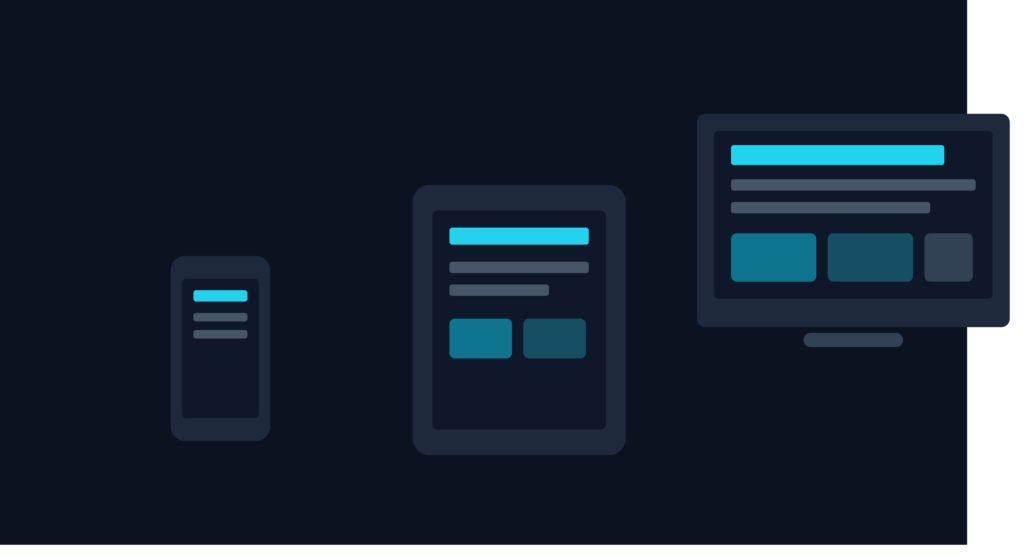
Mobile devices now account for roughly 64% of global web traffic, up from about 50% in 2018 — and the gap keeps widening in some regions, with Asia-Pacific closer to 70% mobile. Designing for mobile first, rather than adapting a desktop layout afterward, isn’t a stylistic preference anymore; it reflects where most of your actual visitors are.
2. Core Web Vitals & Page Speed
Page speed remains a direct Google ranking factor and the single biggest lever on whether a visitor actually stays. Image optimization, a content delivery network (CDN), and minified CSS/JS are the baseline fixes — but the bigger, more common culprit on WordPress sites specifically is plugin and page-builder bloat, which no amount of image compression alone can fix.

3. Accessibility (WCAG Compliance)
Building to WCAG standards — perceivable, operable, and understandable content for all users — isn’t just good practice; it’s increasingly a legal requirement in the EU (under the European Accessibility Act) and a factor in several US state-level regulations. Accessible sites also tend to have cleaner semantic structure, which independently helps search engines and AI tools parse your content correctly.
4. Search & AI Visibility (SEO + GEO)
Traditional SEO — clean site architecture, fast load times, structured data — now shares the stage with Generative Engine Optimization (GEO): structuring content so AI tools like ChatGPT and Google AI Overviews can accurately cite your business when someone asks a question, not just so you rank in a traditional results page. The two overlap heavily but aren’t identical, and a site optimized for only one is leaving visibility on the table for the other.
5. API-First Architecture
Designing your backend around clean APIs from the start — rather than bolting on integrations later — makes it far easier to connect your site to CRMs, payment processors, and internal tools as your business grows, without a costly re-architecture down the line.
6. Ongoing Security & Maintenance
A one-time security setup isn’t enough given the breach-cost trends above. Regular update testing (in staging, not live), automated backups, and continuous monitoring are what actually prevent the “silent until it’s expensive” failure mode most small businesses experience.
Frequently Asked Questions
What is the biggest web development trend in 2026?
AI-powered and agentic development is the most significant shift, with developer adoption now above 84–90% depending on the survey — but the businesses getting real value are the ones pairing AI-assisted speed with experienced human review, not replacing it.
Do I need a Progressive Web App (PWA) instead of a native app?
Not always — it depends on what your users need. A PWA is usually the better choice for businesses that want app-like speed and offline access without the cost of building and maintaining separate iOS and Android apps; a native app still makes sense when you need deep device features (like camera hardware access or push notification volume) a PWA can’t match.
How much does modernizing a website for these trends cost?
It depends heavily on scope — adding structured data and improving Core Web Vitals is a relatively small project, while a full AI-ready, edge-optimized rebuild is a larger one. WebClyde provides a fixed quote after a free audit, once we know exactly what your current site needs.
Is voice search optimization actually worth it for a small business?
If your customers are the type to ask a voice assistant “who’s the best [your service] near me,” yes — but it’s most valuable layered on top of solid structured data and FAQ content you’d want anyway, rather than as a standalone initiative.
Conclusion
The 2026 web development landscape rewards businesses that adopt AI, performance, and security practices deliberately — not everyone needs every trend on this list at once. A startup shipping an MVP might prioritize AI-assisted development and a fast PWA; an established business handling sensitive customer data should prioritize the security and accessibility fundamentals first. WebClyde specializes in custom WordPress and WooCommerce development built around exactly these priorities — no bloated page builders, no plugin debt, and a security posture built for what breach costs actually look like in 2026. Book a free website audit to find out where your site stands today.